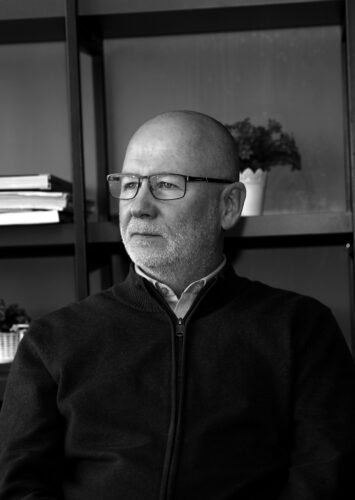
Father towers over everything like a mountain. I watch him with awe. I run around his legs, and sometimes, frantic to get his attention, I bump my head against his knee. Then I start crying, and he picks me up and lifts me high up in the air where everything looks different. I stop whining—it doesn’t befit someone raised above everyone else—and explore the ceiling on this surprise expedition. I can even reach the warm bulb of the ceiling light. When I fly through the living room or the hallway, I want to kick my legs and scream with joy, but I have to hold back, because sudden outbursts like those scare him and he immediately puts me down. This is how I learn, from a very early age, to control my emotions and hide my happiness. I likewise realize early on that happiness—true, complete happiness—is rather rare and all too brief.
*
Father isn’t only the tallest person in the world, he’s the most skillful. No one can beat him at foosball—though we rarely play, because, when Father comes home from work, first he’s hungry, then tired, and by then it’s too late and time for dinner. He tells me to clear the foosball set off the dining table and place it back in its cardboard box, we’ll play tomorrow. He gets the metal ball easily in the goal, even using one of the bad plastic players spinning on an angle with a worn spring, farthest from goal. The field has sagged around each player, so it looks like they’re sinking into the ground. If you make a bad pass and the ball slips into a crater near one of Father’s players, that’s the end of the story. When he strikes, the ball becomes invisible. Useless to tug your goalie left and right: you’d be better off watching your fingers.
And then there’s real football. On the mowed field of the Tilava excursion spot, I run after him and beg him to kick the ball. He puts his lit cigarette down in the grass, scoops up my colorful ball and deftly bounces it off his knee, then launches it skyward—so high it momentarily turns into a speck in the sky. Without a hurry he picks up his cigarette and smokes while we wait for the ball to fall back down. I ask him how high he can kick it, and he says to the moon, but then the ball can’t come back. He thinks this would be a shame, since the ball’s still so new. I nod in agreement—he’s also the wisest.
*
Ever since Father started driving—our light blue Fiat 1300 with black interior like a real limousine—eating ice cream inside is strictly forbidden, as is dirtying the seats with your shoes. He looks left and right, accelerates and brakes, scans the radio channels, talks seriously with Mother, and keeps a watchful eye on my brother and me in the rearview mirror. It’s past three o’clock and some parents have already picked up their children. I wait for him at the window of the daycare Playful Days, which overlooks the street leading to Koševo Stadium. It’s the start of summer, time for repainting my daycare in Višnjik, where loud and chirpy misters now pour in. At their winks, the teachers are taken aback. They wear paint-splattered coveralls and hats made of newspaper—they promise to make me one, too, if I tell them the teachers’ names. And that’s how come I’m now in a different daycare where I don’t feel comfortable; I don’t have my cubby with the sticker of a frog in the grass, or my favorite toys, or my best friends. In an unfamiliar place, the long summer hours never end. I’ve turned my back on that world, on the children and adults, who, as concerns me, no longer exist: my shoes are on and I’m ready—all that’s left is for Father to appear. Sometimes, when the traffic quiets down, you can hear the roar of a lion at the Pioneer Valley Zoo, but now even that doesn’t interest me, the sound of every car makes me think it’s our Fiat. And then he finally arrives. I run toward him before he parks. He steps out of the car, spreads his arms—ironed black trousers, white collared shirt, and a tie that frightfully scrambles off his belly to the side—and lifts me into the air. I waited a long time for him and he’s finally here—for a moment I forget myself in my joy, and I start kicking and squealing, and he immediately puts me down. I step into the car, I won’t let this lapse ruin the happiness of him coming for me. We drive home and listen to the news on the radio. After much pleading for him to honk, he briefly presses something on the steering wheel. A cheerful horn sounds, like in a cartoon, and I bite my lip, holding back a scream, because now I’ve regained control of myself.
*
Father knows everything—ask him anything if you don’t believe it. Actually, ask him about anything but homework. When I bring my notebook to the dining table, where he spends day and night ruling over our two-bedroom kingdom on the eleventh floor, he always frowns. He’s unhappy I’m laying siege to the fragile foundation of his afternoon rest and intruding uninvited past the carefully constructed walls. He hides from the rest of the world with a cigarette, coffee, and a newspaper. He wonders why I don’t know the material myself, why I don’t pay attention during lessons, what—for heaven’s sake—I even do in class? He can’t gather everything in my notebook—my handwriting isn’t readable—and asks irritably for the textbook. When I bring it, he anxiously lights a cigarette and flips through the pages. I stand dejected beside him, as though transported in front of the school blackboard, and wait for him to address me. He asks which lessons we’ve covered, then grows frustrated, expecting me to understand the question and answer immediately. He gets even angrier when I now, in a panic, freeze up. I don’t understand his explanations, the lion’s already shaking his mane in a rage. He’ll roar any minute… Ask him, then, anything you want—except about homework, which I no longer bring to him. That’s my homework: he finished school long ago.
*
I start high school, and Father has shrunk almost to my height. A few grays fleck his hair. He’s replaced his suits with a blue synthetic jacket he bought in Trieste. He no longer drives to work—there are fuel and coffee shortages—and instead of chocolate and bananas, guests now bring “sugar bars” and apples. In the dining room, there’s a small black-and-white TV. From the spot where he sits permanently installed, Father watches the news and officially declares the country’s situation to be dire. Right around then, months have passed since I began trying—unsuccessfully—to persuade him to buy me a computer, preferably a Commodore, but a Spectrum would be perfectly fine. There’s not a single emotional hotkey I haven’t tapped—from repeating that everyone in the neighborhood had not only a computer but a videocassette recorder, to pointing out that our esteemed first-placer—mister oldest son—already got a sound system and an electric guitar, while I got nothing. I didn’t even get through promising to improve my grades before we both burst into laughter like I’d just told a good joke. Maybe with time I finally pressed the right key, or maybe he simply got tired of me—either way, one Friday he came home early, downed a coffee, and asked what I thought of the computer brand Amstrad. I know it’s excellent and I barely manage to hold back a scream. He checked the oil level in the car, started our red Opel Kadett, and drove off to Munich. Again I find myself waiting impatiently for Father, like I did once long ago while exiled in an alien daycare. I go out to the parking lot in front of our building to see him sooner. It’s Sunday afternoon, he hasn’t called with an update, but by all logic, he should be back any moment. Where could he be? He has work tomorrow. Since Father has been driving all weekend, he’s got his head in a bag and precious cargo in the trunk. I imagine him, tired and sleep-deprived, looking left and right, accelerating and braking on that faraway autobahn, standing under the metal awning of a gas station and drinking the blackest German coffee from a Styrofoam cup. Maybe he’s already somewhere nearby, rolling down the window to let a sharp gust of Bosnian air into the car, splashing his face with cold water from a roadside spring, listening to the Sunday football broadcasts on the radio to stay awake. I scan the street—visiting hours at Koševo hospital are over and there’s hardly any traffic on the entire block. The day, like a candle, has burned to its last third. He still isn’t back. Wherever he is, if he’s alert, he’ll see me in the rearview mirror.
*
Father’s hands are thin and shaky, his pointer and middle fingers yellowed from smoking. In wartime Sarajevo, military-rationed cigarettes are smoked down to the filter, until the heat sears the fingernails. We’ve been without electricity for months. Father takes a long time to climb the stairs to the eleventh floor, and now he stands gasping for breath, his knees trembling, with no energy left to take off his boots. He turned fifty, and his soul, as he says with a roll of the eyes, came out through his nose, from having to haul radio equipment over a stretch of ten kilometers—from the Maršal Tito Barracks all the way to the outskirts of the city in Ilidža. To make matters worse, the whole time, some ill-mannered little snot of rank kept screaming at his spent unit, even though almost all the radiomen are old enough to be his father. Still catching his breath, he wonders, sighing, how there’s no fuel to transport communications equipment to the front line, but plenty for various local big shot “sheriffs” and shams giving their mistresses joyrides around the city. Everything will be easier if only he manages to take off his muddy boots and sit at the dining table, from the spot where he sits permanently installed and rules day and night over our two-bedroom kingdom. Except the time he spends at the front during the war. In those moments, we’re left headless.
*
The hand holding my first mobile phone—an Ericsson the weight of a brick—trembles as Mother tells me they found “something” during my father’s last exam. I’m on a different continent, the connection could be better, maybe I didn’t hear her right. She mentions this “something” again, so ominous and terrifying that it shall remain unnamed. She tries to console me by saying people live with it for as many as ten years. I don’t believe a word. I snort angrily that she’s trying to make things sound better than they are. The doctors don’t recommend operating on this “something,” and Father won’t undergo radiation or chemo. I ask what the treatment is then—she doesn’t understand enough to say. It’s a workday and I’m standing outside the building. I look for shade from the harsh sun beneath a newly planted palm tree. Beside it is a black plastic hose that lets a few drops fall here and there, sufficient for frugal and resilient desert plants. The palm hasn’t branched out yet, but I’m grateful for any shade, and it’s enough to get my forehead out of the heat. In one shaky hand I hold the weighty phone, my knees buckling, and with the other I lean on the tree that shields me from the sun. The life of the young palm is just beginning, and Father’s is ending. I want to hang up, but instead I ask Mother to start over and tell me everything again, no skipping or sugarcoating. She tells me everything from the start and again softens reality. She’ll never learn to unload her worries and hardships onto her sons.
*
Getting home quickly isn’t that simple. In a celestial three-parter, I launch out of the Emirates—first, into a depressive, overcast Prague night, before rebounding energetically off Zagreb the following day, and by evening I land on both feet, spent, in our apartment on the eleventh floor. Father is lying on the sofa in the living room, where the blinds are drawn. I frown at the hospital smells that have crept into the curtains, towels, and sheets. As though by some unspoken agreement, no one sits in his chair at the dining table. For my arrival, Father has been let out of the hospital over the weekend, but he mostly sleeps. On the nightstand near his head, there’s a glass of freshly squeezed juice, tissues, and a brown bottle of liquid morphine, which he grabs repeatedly and often. Afterward, he can’t stay awake—it seems like he doesn’t see me, or rather that he can’t see anything from inside the cage built from pain and sedatives. Taheebo teas and beetroot juice never helped anyone, so they won’t help him either, but we healthy ones go through the motions anyway just to keep our shaky hands busy. I watch as he sleeps beneath the ceiling he used to let me explore so I’d stop crying. He’s so thin that he resembles the empty shell of an insect. Right before my eyes, he grows transparent and vanishes.
After the weekend, they take Father back to Koševo hospital. Why do that, when he’s not receiving treatment? It serves no purpose, except that it lets Mother catch her breath—at least briefly. I visit him in the long, echoey room he shares with people healthier than him. His new roommates regularly find their way to laughter and often step out onto the terrace for a smoke. Since I arrived, we only talk about his illness. For the umpteenth time he explains in detail what medications he has to take, what the latest tests showed, and what the doctor told him.
“Push through somehow…” I say, because he’s looking at me as though expecting to hear something meaningful.
“Think I’m not trying?!” he shouts.
For some time, we don’t speak. Then I admit I’m just saying the first thing that comes to mind because I have no idea what to say. I ask him what advice he’d give his own father.
He says nothing, but the lines of his face soften.
This is the last time I see him. Shortly I will return to my new life in a desert city, and he will stop breathing.
The night he will die, Mother asked Father to recite the Yasin sitting on the nightstand. He agreed to, and that was the last decision he made in our two-bedroom kingdom on the eleventh floor. Later, she told me that she’d dreamed of the Kaaba that night. She takes it as a wonderful sign, which I accept gratefully with both hands and gently, like a warm compress, placed against my ice-cold chest.
*
Father towers over everything like a mountain—and in the end becomes one, too. He’s buried on a hill rising proudly above Podhrastovi with a clear view of our apartment building—a miniature model where we, microscopic people, briefly dream our lives into being. Mother tells me that, every morning, she recites the Fatiha for him, gazing out of the window toward the mezar where he lays. I think about how she still serves him in this way. Each morning she’d place a black coffee before him on the dining table, and now she recites a daily prayer consisting of seven repeated verses. She had a headstone built for him—geometrically precise and without a single unnecessary embellishment, much like his clear technical drawings at Energoinvest. Time flows differently by his grave, the air is sticky and full of pollen, ants meet gently on the marble surface and move as though in slow motion. I remember his hands, but can no longer recall his voice. I’m better off holding back the tears, since he’s no longer around to lift me high up in the air where everything looks different.

Otac
Moj otac je velik kao planina, gledam ga s divljenjem, trčim oko njegovih nogu, neki put od silnog mahnitanja, ne bi li me primijetio, udarim glavom od njegovo koljeno. Onda malo plačem, pa me on uzme u ruke i podigne visoko iznad sebe gdje sve izgleda drugačije. Prestajem cendrati jer to ne priliči onom što je uzdignut iznad svih, na takvoj iznenadnoj ekspediciji radoznalo istražujem plafon, čak mogu dodirnuti i toplu kuglu lustera. Kada u njegovim rukama letim kroz dnevnu sobu ili hodnik, želim da mašem nogama i vrištim od sreće, ali se moram suzdržati jer ga takvi eksplozivni ispadi prepadnu i odmah me spusti. Tako od malena učim kontrolirati emocije i kriti kada sam sretan. Također, vrlo rano uviđam da je sreća, ona istinska i potpuna, prilično rijetka i traje prekratko.
Moj otac nije samo najveći na svijetu već je i najvještiji. Niko ga ne može pobijediti u stolnom fudbalu – pucometu, koji, doduše, rijetko igramo jer je otac, kada se vrati s posla, prvo gladan, pa onda umoran, da bi na kraju bilo prekasno i treba se večerati. Kaže mi da sklonim pucomet s trpezarijskog stola i spakujem ga nazad u kartonsku kutiju, igrat ćemo sutra. On ti može sasvim lako metalnom kuglicom dati gol, čak i s lošim plastičnim fudbalerom, onim koji se ukrivo klati na istrošenom federu najdalje od tvog gola. Teren je ulegao oko igrača pa se čini da propadaju u zemlju, ako loše dodaješ i kuglica ti sklizne u rupe kraj očevih figurica, to je kraj priče. Kada on opali loptica se i ne vidi, džaba ti je golmanom drmati lijevo‑desno da sačuvaš gol, bolje pazi prste.
A tek pravi fudbal. Na pokošenoj livadi izletišta Tilava trčim za njim i molim ga da napuca loptu. On spusti zapaljenu cigaretu u travu, zagrabi moj šareni gumenjak i vješto ga odbije od koljena, a onda loptu tako lansira nebu pod oblake da se ona trenutno pretvori u tačkicu. Bez žurbe uzima cigaretu i puši – dok čekamo da padne nazad. Pitam ga dokle je može najviše napenaliti, a on kaže do Mjeseca, ali poslije toga lopta se više ne može vratiti. Misli da bi to bila šteta jer je još suviše nova. Klimam glavom potvrdno, on je i najmudriji.
*
Kako moj otac vozi auto, našeg svijetloplavog Tristaća s crnom unutrašnjosti prave limuzine, unutra se ne jede sladoled i sjedišta nipošto ne smiješ prljati cipelama. Gleda lijevo i desno, ubrzava i koči, mijenja radiostanice, priča s mamom ozbiljno, retrovizorom budno prati šta brat i ja radimo. Prošlo je tri sata i već su neki roditelji došli po djecu, čekam ga na prozoru obdaništa “Razigrani dani” koje s visine gleda na ulicu prema stadionu Koševo. Početak je ljeta, vrijeme za moleraj mog vrtića na Višnjiku u koji upadaju glasne i raspjevane čike. Na njihovo namigivanje vaspitačice se snebivaju, nose bojom poprskane kombinezone i papirne novinske kape, i meni će napraviti jednu ako otkrijem kako se koja vaspitačica zove. Zbog toga sam sada na teritoriji stranog obdaništa gdje se ne osjećam ugodno, nema mi ormarića s naljepnicom žapca u travi, igračaka koje volim i najboljih drugova. U tuđini su dugi ljetni sati. Okrenuo sam leđa tom svijetu, djeci i odraslima koji za mene više i ne postoje, već sam obučen i spreman, samo još da se otac pojavi. Neki put, kada se utiša saobraćaj, može se čuti rika lava iz zoološkog vrta Pionirska dolina, ali sada čak ni to nije interesantno, od svakog zvuka auta koji prođe čini mi se da je naš Tristać. I onda napokon stiže, trčim prema njemu dok još nije ni parkirao. Izlazi iz auta i širi ruke, crne hlače na peglu, bijela košulja i kravata koja uplašeno bježi sa stomaka u stranu, podiže me u zrak. Dugo sam ga čekao i konačno je tu, za tren se od užitka zaboravljam, počinjem se nogatati i praviti zvukove pa me odmah spušta. Ulazim u auto, ne dozvoljavam da mi ta neopreznost pokvari sreću što je došao po mene. Vozimo se kući i slušamo vijesti na radiju. Poslije dugo nagovaranja da svirne on će kratko pritisnuti nešto na volanu. Čuje se veseli zvuk sirene kao iz crtanog filma, grizem usne, obuzdao sam vrisak u sebi jer se već bolje kontroliram.
*
Moj otac sve zna, upitaj ga bilo šta ako ne vjeruješ. Zapravo, pitaj ga o svemu osim o zadaći. Kada mu donesem svesku za trpezarijski stol, s kojeg danonoćno upravlja našim dvosobnim carstvom na jedanaestom spratu, uvijek se namrgodi. Nije sretan što opsjedam krhki temelj popodnevnog odmora i upadam nepozvan među brižljivo podignute zidove. Od cijelog svijeta se krije s cigaretom, kafom i novinama. Čudi se kako sam ne znam, zašto ne pratim nastavu, pa šta, zaboga, radim na času? Nije mu sve jasno iz sveske, rukopis mi nije čitak, razdraženo traži i knjigu iz tog predmeta. Kada mu je donesem, nervozno pali cigaretu i lista stranice naprijed, stojim pored njega pokunjeno kao pred školskom tablom i čekam da mi se obrati. Pita me koje smo lekcije radili, onda se iznervira, očekujući da u trenu shvatim šta govori stvarajući mi pritisak. Dodatno ga ljuti što sam se, u panici, sada već sasvim zablokirao i isključio. Ne razumijem njegova objašnjenja, lav već bijesno trese grivom i samo što nije počeo da riče… Pitaj ga, dakle, šta god želiš osim zadaće s kojom mu više ne dolazim. To je moja zadaća, on je svoje školovanje davno završio.
*
U srednjoj sam školi, otac se smanjio skoro na moju visinu. Poneka sijeda mu se pojavljuje u kosi, prestao je oblačiti odijela i nosi plavu jaknu od sintetičkih tkanina kupljenu u Trstu. Na posao više ne ide automobilom, nestašice su goriva i kafe; umjesto čokolade i banana, gosti sada donose šećernu tablu i jabuke. U trpezariji je postavljen mali crno‑bi jeli TV. S mjesta gdje trajno ustoličen gleda dnevnik, otac službeno proglašava situaciju u državi teškom. Baš tada ga mjesecima bezuspješno pokušavam nagovoriti da mi kupi kompjuter, volio bih Komodor ali i Spektrum je sasvim dobar. Nema koji taster na njegovoj savjesti nisam pritisnuo, od napomene da svi u komšiluku imaju, ne samo računar već i videorekordere, pa do činjenice da je naš uvaženi prvak, njegov gospodin stariji sin, već dobio muzičku liniju i električnu gitaru a ja ništa. Nisam stigao ni završiti obećanje da ću popraviti ocjene, a već se obojica tome smijemo kao dobroj šali. Možda sam s vremenom pogodio pravi taster, ili sam mu jednostavno dodijao, kako god, jednog petka je kući došao ranije, nalijevao se ubrzano kafom i pitao me šta mislim o kompjuteru marke Amstrad. Znam da je odličan i jedva zaustavljam vrisak, vješto krijem sreću. Prekontrolirao je pažljivo nivo ulja u autu, upalio našeg crvenog Opel Kadeta i odvezao se u München. I opet oca čekam nestrpljivo, kao nekada davno u progonstvu tuđeg obdaništa; izašao sam na parkiralište ispred zgrade da ga što prije vidim. Nedjelja je poslijepodne, nije nam se javio ali, po logici stvari, svaki čas bi trebao da se vrati. Gdje je do sada, već sutra ide na posao? Kako moj mahniti otac cijeli vikend vozi auto, glava je u torbi a dragocjeni teret u prtljažniku. Zamišljam ga kako umoran i neispavan gleda lijevo i desno, na dalekom autobanu ubrzava i koči, pije iz stiropornih čaša najcrnje njemačke kafe pod limenim strehama benzinskih pumpi. Možda je već negdje bliže pa otvara prozor provjetravajući auto oštrim bosanskim zrakom, umiva se ledenom vodom na nekoj česmi pored puta, na radiju sluša nedjeljne prijenose utakmica da ostane budan. Izviđam ulicu, završilo je vrijeme posjeta bolnici Koševo i u cijelom kvartu skoro da i nema saobraćaja. Dan je, kao svijeća, nepovratno dogorio do zadnje trećine. Još ga nema. Gdje god da je, ako stigne pogledati pažljivo, naći će me u odrazu retrovizora.
*
Očeve ruke su mršave i drhtave, kažiprst i srednji prst sasvim žuti od duhana. U ratnom Sarajevu se vojna sljedovanja cigareta puše do filtera i dok ne dogori do noktiju. Bez struje smo već mjesecima, otac se dugo penjao na jedanaesti sprat, pa sad stoji i bori se za dah, koljena mu klecaju, nema snage skinuti čizme. Prevalio je pedesetu i duša mu je, kako kaže kolutajući očima, na nos izašla jer je morao kilometrima nositi radioopremu. Tačnije od kasarne “Maršal Tito” sve do naših položaja prema Ilidži. Da stvar bude gora, neodgojeni balavac s nekakvim činom sve vrijeme se derao na njegov iscrpljeni vod, a gotovo svi vezisti mu po godinama mogu očevi biti. Još nije u potpunosti došao do daha, čudi se uzdišući da nema goriva za prebacivanje sredstava veze na liniju, a ima za kojekakve lokalne šerife i izmišljene veličine dok vozikaju švalerke po gradu. Sve će biti lakše samo ako uspije skinuti blatnjave čizme i sjesti za trpezarijski stol, mjesto gdje trajno ustoličen danonoćno upravlja našim dvosobnim carstvom. Osim u ratu kada je na liniji, za to vrijeme smo sasvim obezglavljeni.
*
U ruci mi drhti kao cigla težak moj prvi mobitel marke Ericsson, dok mi mama govori da su ocu našli “nešto”. Na drugom sam kontinentu, veza nije najbolja, možda nisam dobro čuo. Opet spominje to “nešto”, toliko zlokobno i strašno da mu se ni naziv ne smije izgovoriti. Tješi me da ljudi s tim žive i još po deset godina, ništa joj ne vjerujem, ljutito frkćem što situaciju predstavlja boljom nego što stvarno jeste. Doktori ne predlažu da se to “nešto” operira, a ocu nije uključena ni radioterapija ili kemoterapija. Pitam je kako ga onda uopće liječe, ne zna mi odgovoriti. Radni je dan i ispred firme sam. Tražim hlad od žestokog sunca ispod tek zasađene palme. Pored nje je crno plastično crijevo iz kojeg ponekada kapne malo vode što je skromnim i izdržljivim pustinjskim biljkama sasvim dosta. Još se nije razgranala ali sam zahvalan i na mrvici hlada, barem čelo sklanjam s vreline. U jednoj drhtavoj ruci držim preteški mobitel, koljena su mi klecava, drugom rukom se naslanjam na drvo iza kojeg se krijem od sunca. Život mlade palme tek počinje, a onaj od mog oca završava. Želim da prekinem vezu, ali umjesto toga mamu pitam da mi još jednom sve ispočetka kaže, ne preskačući ništa i bez foliranja. Govori mi ponovo i opet uljepšava realnost. Nikada neće naučiti istovariti strahove i muku na duše svojih sinova.
*
Doći brzo kući nije tako jednostavno. U nebeskom trokoraku skačem iz Emirata, prvo na jednu depresivnu noć u sasvim sivom Pragu, odbijam se sutradan energično u Zagrebu, isti dan se s obje umorne noge dočekujem u stanu na jedanaestom spratu. Otac leži na trosjedu u dnevnoj sobi, gdje su spuštene roletne. Mrštim se na bolničke mirise koji su se uvukli u zavjese, peškire i posteljinu. Kao po nekom prešutnom dogovoru u njegovoj stolici za trpezarijskim stolom ne sjedi niko. Oca su zbog mog dolaska pustili na vikend iz bolnice, ali on uglavnom spava. Na noćnom stoliću pored njegove glave je čaša cijeđenog soka, papirne maramice i smeđa flašica tečnog morfija za kojim često poseže. Poslije toga ne može ostati budan, čini mi se da me ne vidi, zapravo da ništa nije ni moguće vidjeti iz kaveza bola i sedativa u kojem je zatvoren. Taheebo čajevi i cijeđene cvekle nisu nikome pomogle pa neće ni njemu, ali to se svakako i radi samo zbog nas zdravih da uposlimo drhtave ruke. Gledam ga kako spava ispod plafona na koji me je dizao da prestanem plakati. Toliko je mršav da nalikuje praznoj ljušturi nekog kukca. Pred mojim očima postaje proziran i nestaje.
Poslije vikenda oca vraćaju u bolnicu Koševo. Zašto to rade kada ne prima terapiju? Nikakva korist od toga osim što, barem nakratko, mama može doći do daha. Posjećujem ga u dugačkoj akustičnoj sobi koju dijeli s ljudima zdravijim od sebe. Njegovi novi cimeri se smiju i često izlaze na terasu zapaliti cigaretu. Od kako sam došao pričamo samo o njegovoj bolesti. Po ko zna koji put mi u detalje objašnjava koje lijekove mora uzimati, kakvi su zadnji nalazi i šta mu je koji doktor rekao.
“Trzni se nekako…”, kažem jer me gleda kao da očekuje nešto čuti od mene.
“Misliš da ne pokušavam?!”, pita me povišenim glasom.
Neko vrijeme šutimo. Priznajem da brbljam samo zato što nemam pojma šta bih drugo rekao. Pitam ga šta bi on svom ocu savjetovao?
Ništa mi ne odgovara ali mu crte lica postaju blaže.
To je zadnji put da ga vidim. Još malo pa ću se vratiti svom novom životu u pustinjskom gradu, a on će prestati da diše.
Mama je, u noći kada će umrijeti, pitala oca da prouči Ja‑sin pored njegovog kreveta. Prihvatio je i to je posljednja odluka koju je donio u dvosobnom carstvu na jedanaestom spratu. Poslije mi kaže da je tu noć usnula Kabu. Smatra da je to lijep znak koji zahvalno prihvaćam s obje ruke i pažljivo, kao toplu oblogu, privijam na svoja promrzla prsa.
*
Moj otac je velik kao planina, na kraju je i postao planina. Ukopan je na Grlića brdu, koje se gordo uzdiže nad Podhrastovima i s kojeg se jasno vidi naš neboder, nalik minijaturnoj maketi u kojoj mi, mikroskopski ljudi, kratko sanjamo naše živote. Mama mi kaže da mu svako jutro prouči Fatihu gledajući kroz prozor prema mezarju. Razmišljam kako ocu tako i dalje služi. Nekada mu je ujutro na trpezarijski stol iznosila crnu kafu, a sada svakodnevno poslužuje molitvu od sedam ajeta koji se ponavljaju. Podigla mu je i nišan, geometrijski pravilan i bez ijedne nepotrebne linije, toliko nalik njegovim jasnim tehničkim crtežima u Energoinvestu. Vrijeme oko njegovog kabura teče nepredvidljivo, zrak je ljepljiv i pun polena, mravi se po mramornim površinama dodiruju nježno i kreću kao u usporenom snimku. Pamtim njegove ruke ali ne mogu da se sjetim glasa. Bolje je zaustaviti suze jer njega nema da me podigne visoko iznad sebe gdje sve izgleda drugačije.